
Genocide .live

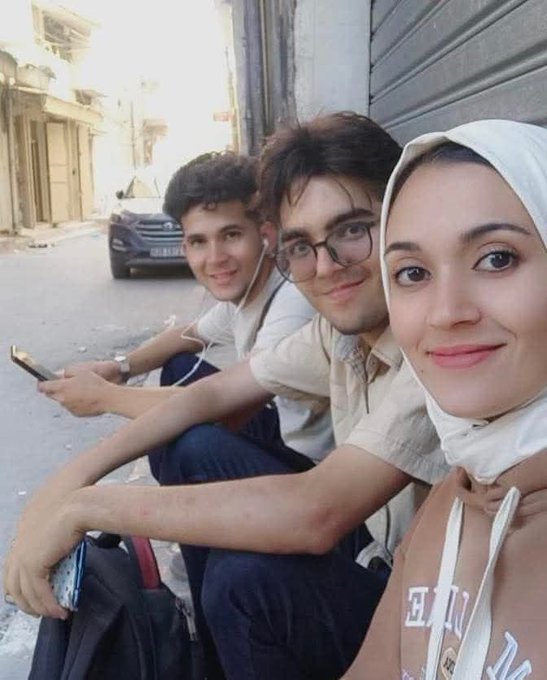
Disappearance of the Musallam siblings
Gaza, Gaza City, Tuffah
05 Jul, 2025 - 16 Aug, 2025
At least 3 martyred
On July 5, 2025, an Israeli airstrike targeted a house in Al-Shaaf area of eastern Gaza City, cutting off contact with three siblings living nearby. The affected individuals were Marwa Musallam, a journalist who hosted the daily morning program and other segments on living conditions at the local Al-Shabab ("youth") radio station, along with her brothers Moataz and Montaser.
The strike left their fate uncertain, and they were presumed dead until July 28, 2025, when one their brother living in Russia received a call from Marwa's phone number.
This prompted the Palestinian Journalists Syndicate to organize a vigil on July 29, 2025, outside the Solidarity Media Center in Gaza City, urging her rescue.The syndicate reached out to UNOCHA and the Red Cross, but both reported that the IDF was delaying access, while other international NGOs clarified they only evacuate the living, leaving the situation unresolved.
By August 1, 2025, reports emerged of bodies found in the Tuffah neighborhood, eastern Gaza City, and the siblings were pronounced dead.
However uncertainty lingered about the siblings' fate. On August 12, testimonies collected by media outlet Sahat revealed that Marwa’s close friend, journalist Mariam Al-Dabla, and the Civil Defense spokesperson Mahmoud Basal confirmed the house remained inaccessible to rescue crews. Mariam shared that a civilian had earlier that month retrieved two decomposed bodies from the site, though they were unidentified, and the absence of a third body fueled doubts about the siblings' whereabouts.
On August 16, 2025, the fully decomposed bodies of Marwa Musallam and her brothers Moataz and Montaser were finally discovered by their relatives, after 44 days.

Two days of settlers' and soldiers' attacks in Beita
West Bank, Nablus, Beita
04 Jul, 2025 - 06 Jul, 2025
**On July 4:**
Predawn attacks by settlers on the Samer Abu Zaitoun household near Jabal Sabih. The settlers attempted to set the house on fire and beat three residents who tried to prevent the arson.
Shortly after, Israeli troops stormed the town, firing live bullets, tear gas, and stun grenades. Eight residents were treated for suffocation due to the inhalation of tear gas.
**On July 5:**
Israeli settlers have reportedly opened fire on Jabal Bir Qouza village in the town of Beita, south of Nablus. The area lies near Jabal Sabih (Mount Sabih), which is around 570 m in elevation at the center of land ownership disputes due to settler outposts (Evyatar) and Israeli military activity and mass protests by Palestinians.
These masked Israeli settlers also attacked the outskirts of the town of Beita by throwing stones on homes and civilians and they set fire to a vehicle.
Palestinians in Beita resisted settler incursions from Mount Sabih. A young man was hit by rubber-coated bullets.
**See related events on Tiktokgenocide:**
These events are part of a wider pattern of escalating settler violence in the Beita region, alongside repeated incursions into areas like Bir Qouza and ongoing clashes around Mount Sabih :
[JUNE 2133# ](https://tiktokgenocide.com/event/2133)
[MAY 1864# ](https://tiktokgenocide.com/event/1864)
[FEBRUARY 1588# ](https://tiktokgenocide.com/event/1588)
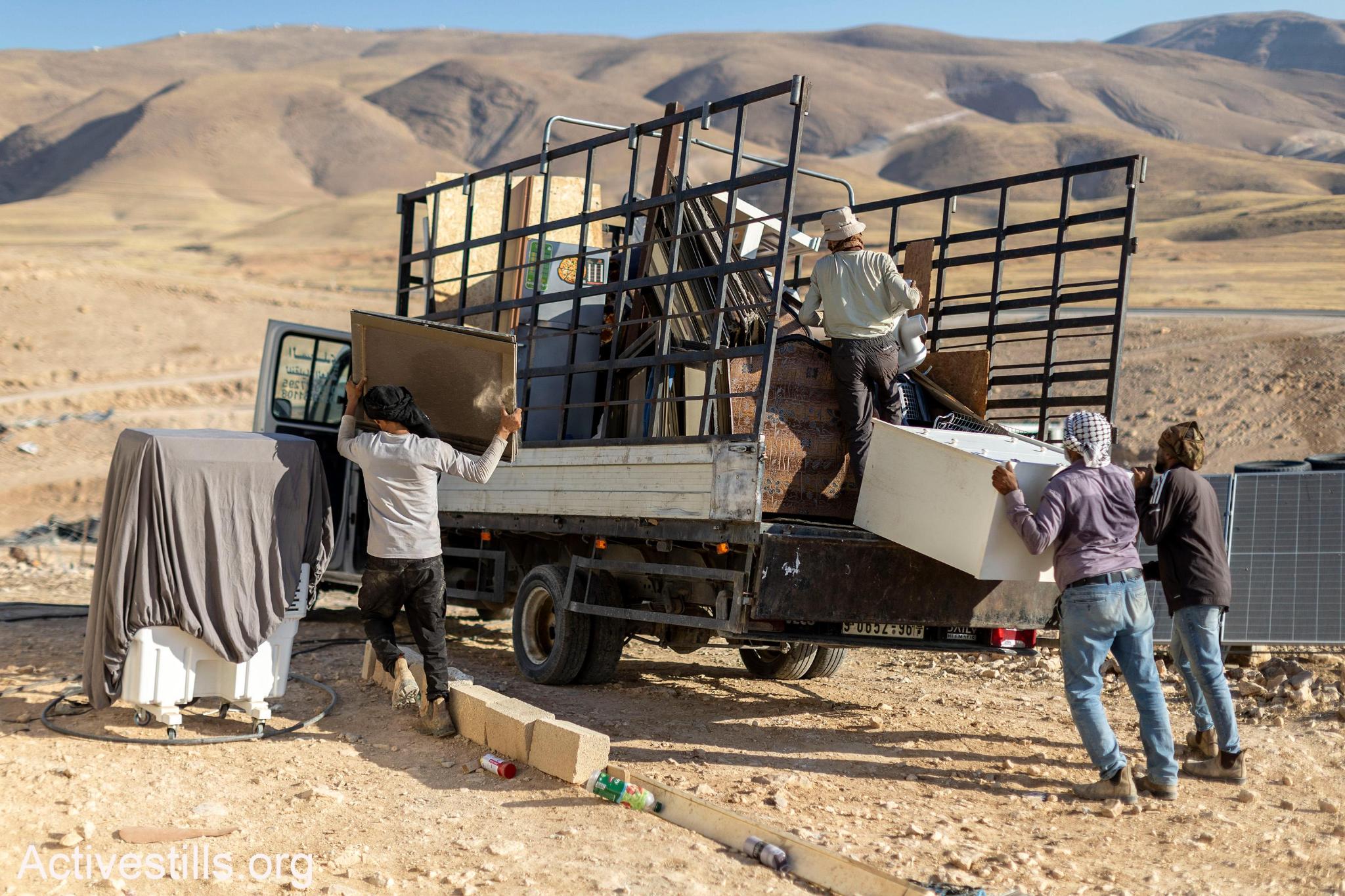
Harrasment and ethnic cleansing in Al-Mu'arrajat shepherd communities
West Bank, Jordan Valley, Jericho, Muarrajat, Arab al-Malihat
04 Jul, 2025 - 05 Jul, 2025
**On July 4, 2025**, 30 Bedouin families from the Mleihat tribe were forcibly displaced from Mu’arrajat in the northern Jordan Valley, dismantling shelters amid escalating settler violence.
Documented attacks included vehicle blockades, school assaults, livestock theft—frequently occurring with Israeli soldier presence and little intervention. By early July, most of the original ~200 inhabitants had fled in fear of their safety.
The UN OCHA reported that between May 27 and June 2 alone, 32 settler attacks affected rural communities—including herding groups in Masafer Yatta and Al-Mu'arrajat—causing injuries and property damage, eroding livelihoods and access to land. According to UNOCHA, Israel government supported expansion of at least 22 new settlement outposts in May 2025, many in the Jordan Valley, intensifying pressure on pastoral communities like Al‑Mu’arrajat.
**On May 1, 2025**
Several masked and armed settlers invaded the village on horseback and passed near the houses and inside the courtyards. An activist, who was there documenting, was attacked by the horse and immediately afterwards pepper spray was sprayed into his eyes. The settlers carry out daily terror against the Palestinians: Beating, injuring, setting fires, throwing stones, stealing and abusing - and all of these with permission and authority, encouraged by the government and security forces.
**On June 7, 2025:** Internationally sanctioned Israeli settler Zohar Sabah invades the village of Muarrajat in the Jordan Valley, occupied West Bank, harassing the residents who was celebrating Eid al-Adha. He drove a new ATV - recently gifted by the Ministry of Settlement and National Missions.
**On June 23, 2025:** Settlers, under the protection of the Israeli army, gathered at dawn near al-Ka’abneh School in al-Muarrajat, playing loud music and shouting religious slogans in what appeared to be an act of intimidation.
**On July 2, 2025:** Illegal Israeli settlers have established a fifth outpost in the Muarrajat area northwest of Jericho in the eastern West Bank, according to the Al-Baydar Organization for the Defense of Bedouin Rights. The settlers set up tents, brought in heavy equipment, and fenced off the land. The group warns this is part of a broader effort to Judaize grazing lands and displace long-established Bedouin communities. The outpost is seen as a strategic political move, not just a land grab, and reflects a pattern where temporary encampments quickly develop into permanent settlements. Al-Baydar emphasized that settlers often act with government support, while Bedouins face severe restrictions.
### Previous attack since october 2023 to end of 2024:
**On September 16, 2024**
On 16 September 2024, illegal Israeli settlers stormed Arab al‑Ka'abneh Primary School in the Al‑Mu’arrajat area. They assaulted students and teachers, wielding clubs, besieged the school, and injured at least three teachers and several students.
**On September 15, 2024**
Israeli forces detained three peace activists in the Arab al-Melihat Bedouin community near Jericho for preventing settlers from herding sheep in local pastures. Hassan Malihat of the Al-Baydar Organization reported that the forces also confiscated the activists' vehicle. This incident follows a series of attacks on the community, including the recent poisoning of sheep. Malihat condemned the actions as part of efforts to displace Bedouin communities in West Bank’s Area C and urged international support to protect civilians.
**On September 13, 2024**
Extremist Israeli settlers have poisoned more than 50 sheep on a Palestinian bedouin farm Belonging to Palestinian brothers Suleiman and Mohammad Melihat by pouring poison into the water that the animals drink from.Hassan Malihat, of Al-Baydar Organisation for the Defence of Bedouin Rights, said extremist settlers had perpetrated a series of attacks on Palestinian farms before this one. Malihat told how the occupiers killed sheep b.
Event Details: [Settlers poison well killing 30 livestock animals](https://tiktokgenocide.com/event/90)
**On February 2, 2025**, at 2 a.m., settlers carried out an arson attack on the Al-Mu'arrajat community in the southern Jordan Valley. Activists arrived to find an IDF patrol and a settler already present, filming and behaving aggressively. An officer took testimony and sent soldiers to the nearby illegal Zohar Sabah outpost to identify suspects. Despite a fire truck arriving 40 minutes later, no action was taken, and the mosque continued burning into the morning. Police later visited the outpost. The resident witness was advised to file a complaint, though past cases suggest it would likely be dismissed. Authorities were aware of the settler violence but failed to intervene.
[Tiktokgenocide event #1581](https://tiktokgenocide.com/event/90)
### **For all the events :**
[Tiktokgenocide event #115](https://tiktokgenocide.com/event/115):
-Settlers assault on Arab Al-Ka’abneh Primary School near Jericho (September 16, 2024)
with previous attacks since October 2023.
[Tiktokgenocide event #90](https://tiktokgenocide.com/event/90)
- Settlers poison well killing 30 livestock animals
[Tiktokgenocide event #1581](https://tiktokgenocide.com/event/1581)
- Settlers burn down mosque and tractor
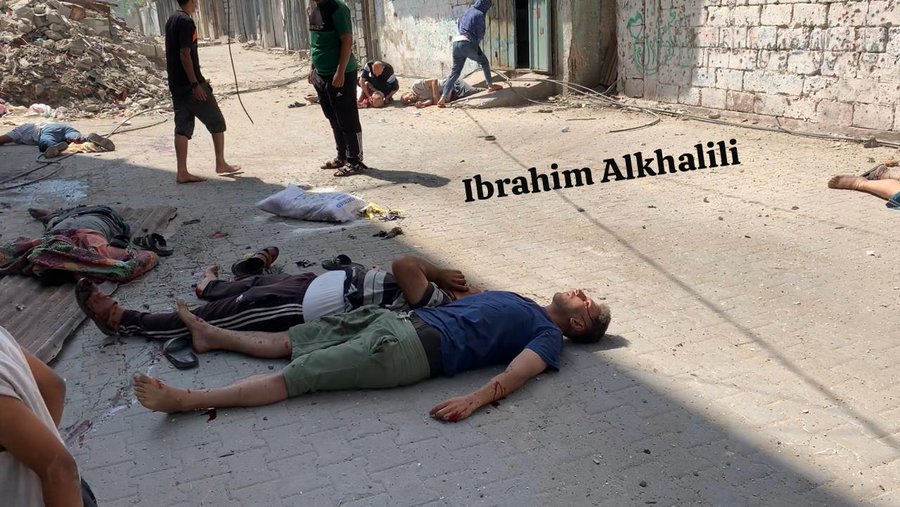
Group killed in Al-Tuffah neighborhood
Gaza, Gaza City, Tuffah
27 June, 2025
At least 10 martyred
Around 11:30 am, Israeli artillery shelling targeted a group of people, mainly form the Saad and Nabahin families, in the vicinity of the Shaaban Al-Rayes school in Al-Tuffah neighborhood, eastern Gaza City.
At least 10 people were killed including journalist Ahmad Saad.
**Names of the martyrs:**
1. Alaa Hassan Saad
2. Ali Hassan Saad
3. Ahmad Hassan Saad (journalist)
4. Khalil Ibrahim Haniya
5. Mohammad Fayez Haniya
6. Ahmad Jamal Salem
7. Bilal Salman Abu Bakr
8. Mohammad Al-Nabahin
9. Wael Sarhan Salem
10. Moataz Wael Salem (Wael's son)

Bloody pogrom in Kafr Malik and Taybeh
West Bank, Ramallah, Kafr Malik
25 June, 2025
At least 3 martyred
On June 25, in the evening, around 20:00, dozens of Israeli settlers invaded Kafr Malik village northeast of Ramallah in the occupied West Bank.
They set on fire the Palestinian property, including residential homes and vehicles, while residents of the town and nearly villages attempted to confront them.
At the same time, Israeli occupation forces have stormed the village in order to secure protection for the settlers. They opened fire with live bullets at Palestinians who are trying to defend their lands and property from Israeli settler attacks.
They prevented ambulances then from reaching and transporting the injured.
Israeli newspaper Haaretz, citing a local resident, reported that it was the Israeli army that killed the three Palestinians, although the settlers also fired handguns.
**Extension of the violence in Taybieh:**
On June 25, 2025, the village of Taybeh—the last entirely Christian town in the West Bank—was violently targeted by Israeli settlers, in coordination with a deadly attack on the nearby village of Kafr Malik. A large group of masked settlers, reportedly dozens strong, descended on Taybeh’s eastern entrance late on June 25, torching homes and vehicles on the outskirts
No casualties were reported within Taybeh, but the episode caused widespread fear among residents .
Local clergy, including Fr. Bashar Fawadleh, condemned the violence as “barbarism and brutality” and warned that Taybeh is now “living under constant fire” and “daily siege
**The Israel Defense Forces (IDF) statement**
They said in a statement on Wednesday that dozens of Israeli civilians set fire to property in al-Mughayyir, a village near Kafr Malik. *"Upon receiving the report, IDF and Israeli Police forces were dispatched to the scene and operated to disperse the confrontation,"(...) "Several terrorists fired from within al-Mughayyir and hurled rocks at the forces, who opened fire toward the source of fire and the rock-hurlers. Hits were identified, and it was later reported that there were several individuals injured and fatalities"*.
The IDF noted that five Israeli suspects were arrested during the incident and transferred to the police.
**In the latest toll:**
At least 7 Palestinians were reported injured. The Palestinian Red Crescent Society (PRCS) reported that its ambulance crews treated five citizens for serious gunshot wounds during the settler attack against Palestinians in Kafr Malik town.
3 Palestinians were reported killed and at least Seven injured
**Names of the martyrs:**
The Shireen Observatory identified the slain Palestinians as:
1) Mershid Nawaf Hamayel, 35,
2) Lotfi Sabry Bairat, 18,
3) Mohammad Maher Al-Naji, age unknown.
**Geolocation:**
[Geolocation](https://x.com/ja31ck/status/1938012482590646476) of the footage where the arson and the clash erupted in Kafr Malik village : 31.982382, 35.306082.
**Simultaneously in the West Bank:**
- Israeli settlers injured an elderly Palestinian man and burned agricultural lands in the town of Asira al-Qibliya, south of Nablus.
- Israeli settlers invaded Asira al-Qibliya, set fire to agricultural lands, hurled rocks at Palestinian citizens in the town, causing an elderly man to sustain a head injury and blocked civil defense crews from reaching the area to extinguish the fires.
- Israeli settlers cut down dozens of olive trees between the villages of Aqraba and Bani Fadel, south of Nablus in the northern West Bank.
- Israeli settlers invaded Palestinian orchards in the “Souf” area and cut more than 80 olive trees.
- Israeli settlers from the Abu Fazza’ Al-Ka’abna, in the Al-Ka’abna Bedouin community, east of Ramallah, burned a Palestinian-owned vehicle parked in front of a house, and several structures. The Palestinian Red Crescent Society (PRCS) stated that its medics treated eight Palestinians for suffocation injuries due to smoke inhalation.
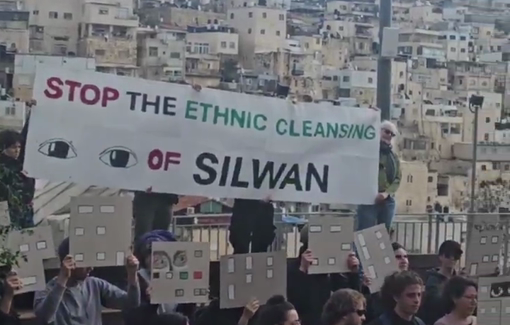
Eviction and ethnic cleaning in Silwan (East Jerusalem)
West Bank, East Jerusalem/Al-Quds, Silwan
23 June, 2025
**Situation in 2019:**
Silwan is a Palestinian neighborhood in East Jerusalem facing severe pressure from overcrowding, poor services, and widespread threats of home demolition and displacement due to restrictions on Palestinian construction. Areas such as al-Bustan have been designated as “green” or “open” zones where building is banned, despite long-standing Palestinian residence. Plans by the Jerusalem Municipality to build a tourist park in al-Bustan could result in the demolition of about 90 homes and the displacement of more than 1,000 residents.
Silwan is also a major target of Israeli settler organizations that take over Palestinian properties to establish settlement compounds. These takeovers often involve forced evictions, causing serious humanitarian impacts. The presence of settlements has created a coercive living environment for Palestinians, marked by heightened tensions, violence and arrests, movement restrictions—especially during Jewish holidays—and loss of privacy due to private security and surveillance.
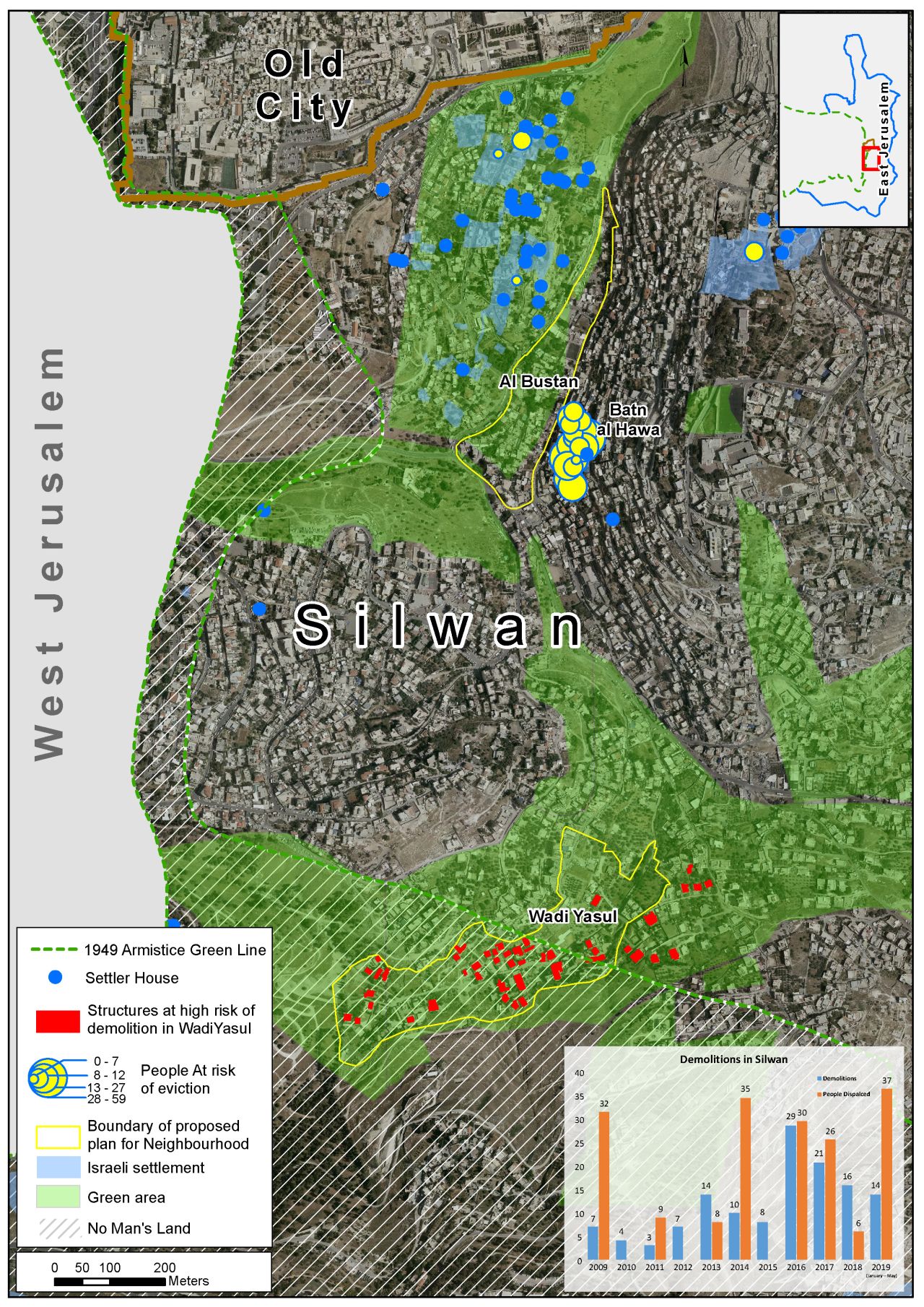
Israeli settler organization Ateret Cohanim first turned to the courts in 2001, when three of its employees assumed control of the *Benvenisti Trust* — a fund established in 1899 to house Yemeni Jewish immigrants in Silwan, who later fled to other areas during the *Great Palestinian Revolt* of 1936-39 against British rule.
Although the trust ceased functioning long ago, Ateret Cohanim revived these ownership claims in 2002, positioning itself as the trust’s legal successor. In 2002, the state granted the trust ownership of 5.2 dunams of land in Batan Al-Hawa, and Ateret Cohanim immediately started filing lawsuits against dozens of Palestinian families living on these plots, despite never proving a connection to the original endowment. Through the trust, Ateret Cohanim subsequently gained control of an additional three dunams of land in the area.
Israeli courts support these claims by applying the 1970 *Legal and Administrative Matters Law*. This law allows Jews to reclaim property in East Jerusalem that was lost during the 1948 war, provided they can show prior ownership. Under this framework, settler groups can seek eviction orders even when Palestinian families have lived in the homes for generations and possess no alternative legal path to ownership recognition.
Critically, this law applies only to Jewish claimants. Palestinians who lost property in West Jerusalem or elsewhere in what became Israel in 1948 are barred from reclaiming their homes under the *1950 Absentee Property Law*, which transferred their property to the Israeli state. As a result, the legal system permits restitution in one direction only.
In practice, this framework creates a one-sided legal mechanism: historical Jewish claims are recognized and enforced in East Jerusalem, while Palestinian claims from the same period are legally excluded. Human rights organizations argue that this imbalance enables settler organizations like Ateret Cohanim to use courts as tools for forced displacement and demographic change, rather than neutral adjudication of property disputes.
**On June 23, 2025,** Israel’s High Court of Justice ordered the eviction of the Al-Rajabi family from their home in the Batn al-Hawa area of Silwan, East Jerusalem, transferring the property to Israeli settlers. The ruling could displace around 30 family members and is part of a broader wave of legal cases targeting Palestinian residents near the Old City.
Silwan, home to about 60,000 Palestinians, has become a key target for settler organizations, particularly the group Elad, which—with government backing—has taken control of dozens of Palestinian properties in recent years. Local leaders warn that up to 87 families in Batn al-Hawa, totaling 700–800 people, face similar eviction threats.
Palestinian representatives and human rights organizations argue that Israeli courts are being used to legitimize settler expansion and forcibly displace Palestinians, describing the policy as discriminatory and aimed at changing Jerusalem’s demographic character.
**On October 1, 2025**, Peace Now reports (Eviction order until 10/19/25 for five families in Silwan for the benefit of settlers) that eviction orders were issued to Palestinian families in Batan al-Hawa, Silwan, including the Um Nasser Rajabi, Shweiki, and Odeh families, forcing them to vacate their homes or face police-enforced removal. The orders follow lawsuits by settlers linked to Ateret Cohanim, claiming historical Jewish ownership of the land.
Israeli courts, including the Supreme Court, rejected the families’ appeals, allowing the evictions. Peace Now highlights that these actions are part of a broader campaign affecting around 700 residents in 80 families, citing discriminatory laws that permit Jews to reclaim property lost in 1948 while denying Palestinians the same right.
**In November 2025**, Israeli authorities, backed by courts and the state, carried out evictions of Palestinian families in Batan al-Hawa, a densely populated area of Silwan just south of Al-Aqsa Mosque. Elderly residents, including Asmahan Shweikeh and Juma’a Odeh, were forcibly removed from lifelong homes, with police seizing properties and immediately transferring them to Israeli settlers linked to the settler organization Ateret Cohanim.
These evictions followed years of legal battles that culminated in Israeli Supreme Court rulings rejecting Palestinian appeals. In 2025 alone, nine Palestinian families in Batan al-Hawa were expelled, joining at least 16 others displaced since the early 2000s. Around 700 additional residents remain at risk, with eviction orders staggered to weaken collective resistance. The takeover of homes has transformed the neighborhood into a heavily militarized area marked by surveillance, private security, police raids, arrests, and settler violence.
Batan al-Hawa’s strategic location near the Old City has made it a central target in efforts to consolidate Israeli control around Al-Aqsa. Longstanding neglect of Palestinian services, combined with aggressive settlement expansion, has contributed to what residents and rights groups describe as the gradual erasure of Palestinian life from East Jerusalem.
**On December 15, 2025,** Israeli authorities forcibly evicted three Palestinian families from their homes in the Baten al-Hawa neighborhood of Silwan, south of Al-Aqsa Mosque in occupied East Jerusalem. The evictions were carried out in favor of the Israeli settler organization Ateret Cohanim and targeted the family of Um Nasser Rajabi and her sons, including relatives with severe medical and disability needs.
Officials say the evictions are part of an escalating campaign of displacement in Baten al-Hawa. Since June 2024, 13 homes have been evacuated, with dozens more at risk. Israeli courts are currently reviewing cases that could affect 26 homes housing about 250 Palestinians, and additional evictions are expected in early 2026.
Ateret Cohanim bases its claims on alleged Jewish ownership dating back to the late 19th century, using Israeli laws that allow Jewish restitution in East Jerusalem while denying Palestinians similar rights to reclaim property lost in 1948. Human rights groups argue this legal framework is discriminatory and enables mass evictions.
Baten al-Hawa’s strategic location near the Old City has made it a prime target for settler expansion aimed at consolidating Israeli control around Al-Aqsa Mosque. The eviction campaign is financially supported by U.S.-based, tax-deductible donations to Ateret Cohanim.
Palestinian officials and rights organizations describe the evictions as part of an ongoing system of forced displacement that violates international law and extends the historical dispossession of Palestinians into the present day.
**On December 18, 2025**: Israeli authorities issued evacuation orders to Jerusalem resident Khalil Basbous and his son Bilal, requiring them to leave their homes in the Batn al-Hawa neighbourhood of Silwan, south of the Al-Aqsa Mosque, by the fifth of next month. The orders were issued in favour of the settler organisation Ateret Cohanim, which claims the land as “Jewish-owned”. Eight members of the family, including children, live in the two homes.
In the same area, settlers, under the protection of Israeli forces, seized the homes of brothers Nasser and Aayed al-Rajbi and their mother. The settlers raised the Israeli flag over the houses after the family was forcibly evicted days earlier, also in favour of Ateret Cohanim.
**On December 22, 2025,** Israeli authorities demolished a four-storey residential building in the Silwan neighborhood of East Jerusalem, displacing more than 100 Palestinians from over ten families, including women, children, and elderly residents. Human rights groups described the operation as the largest demolition carried out in Jerusalem in 2025.
The demolition took place in the early hours of Monday under heavy police and security presence. Witnesses and AFP reporters said three bulldozers tore through the building as residents watched their belongings scattered in the street. Residents reported being awakened while asleep, given only minutes to change clothes and gather essential documents, and denied the opportunity to remove furniture. One resident, Eid Shawar, said his family of seven had nowhere to go and would be forced to sleep in their car.
Palestinian officials strongly condemned the demolition. The Jerusalem governorate, affiliated with the Palestinian Authority, described it as part of a systematic policy of forced displacement aimed at reducing the Palestinian presence in the city, calling it a war crime and a crime against humanity. Human rights organizations Ir Amim and Bimkom said the demolition was carried out without prior notice, just hours before a scheduled meeting intended to discuss possible legal solutions to prevent it.
Israeli authorities justified the demolition by claiming the building was constructed without a permit and was subject to a court-approved demolition order issued in 2014. The Jerusalem municipality said the land was zoned for recreational and sports use, not residential housing. Palestinian residents and rights groups reject this rationale, arguing that Israeli planning policies in East Jerusalem make permits nearly impossible for Palestinians to obtain and are used to deepen an already severe housing crisis.
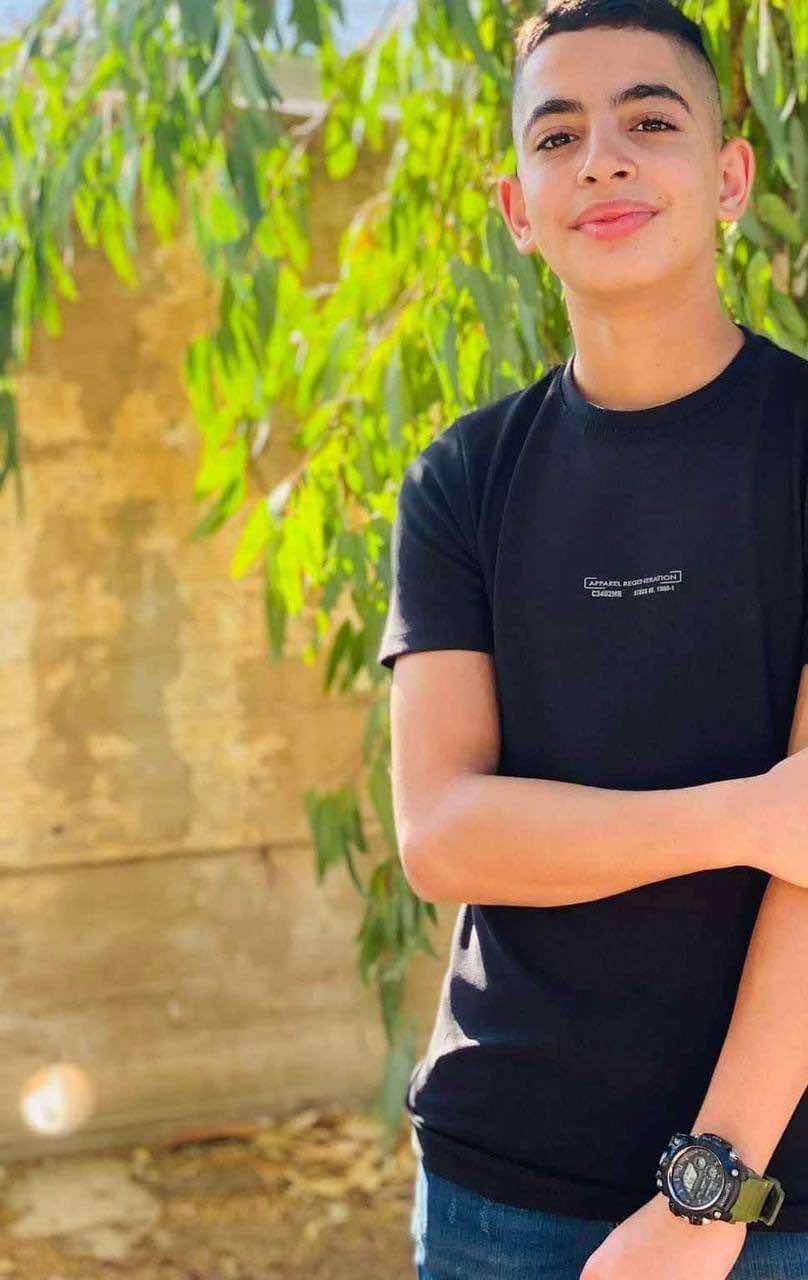
Assassination of Ammar Motaz Hamayel 13 year-old
West Bank, Ramallah, Kafr Malik
23 June, 2025
At least 1 martyred
On June 23, the Israeli army raided the village of Kafr Malik, and shot and killed 13-year-old Ammar Motaz Hamayel allegedly for throwing stones at Israeli settlers.
Israeli forces briefly detained 13-year-old Ammar Mutaz Hamayel after he was shot near the village of Kafr Malik, before handing him over to a Palestinian ambulance crew.
The paramedics took him to the Palestine Medical Complex in Ramallah, where he was pronounced dead.
Kafr Malik, which has a population of about 2,500 Palestinians, is located 17 kilometers northeast of Ramallah and is surrounded by the Israeli settlement of Kokhav HaShahar.
**Defense for Children - Palestine investigation**
Ammar Motaz Mostafa Hamayel, 13, was shot **in the back** by Israeli forces around 4 p.m. on June 23 while out on a walk with a friend near the bypass road adjacent to the Palestinian village of Kufr Malik.
Israeli forces, stationed in a concealed position behind pine trees, opened fire on Ammar and his friend from a distance of between 500 and 1,000 meters (1,640 to 3,281 feet) away. One bullet struck Ammar in his back and exited from his neck. His friend ran away, and Israeli soldiers approached and detained Ammar for about two hours, preventing anyone from reaching him. Around 6 p.m., Israeli forces handed over Ammar to a Palestinian ambulance which brought him to the Palestine Medical Complex in Ramallah, where he was pronounced dead.
According to Ayed Abu Eqtaish the accountability program director at DCIP: *“Ammar was walking with his friend when Israeli forces opened fire on him suddenly and without warning, striking him in the back, indicating he was turned away from the soldiers and posing no threat to them" (...) “He is the 29th Palestinian child killed by Israeli forces in the occupied West Bank this year as Israel continues its campaign of genocide in Gaza with complete impunity."*
While Israeli forces detained Ammar after shooting him, they physically assaulted multiple family members and neighbors who attempted to reach him and provide aid.
Israeli forces also prevented a Palestinian ambulance from providing aid to Ammar.
**Who was Ammar ?**
Ammar was an outstanding student at his school and a distinguished member of the Palestinian national junior Muay Thai team for more than four years. He won multiple local and international titles. His dream was to become a Muay Thai world champion.
**Trageting children is an occupation pattern**
Israel’s routine use of lethal force against Palestinian children reflects a wider policy of violence and impunity that violates international law. Under international human rights law, lethal force may only be used when strictly unavoidable to protect life, yet, Israeli forces continue to target children with deliberate, unlawful killings.
Pogrom and murder in Surif (Hebron)
West Bank, Al-Khalil/Hebron, Surif
19 June, 2025
At least 1 martyred
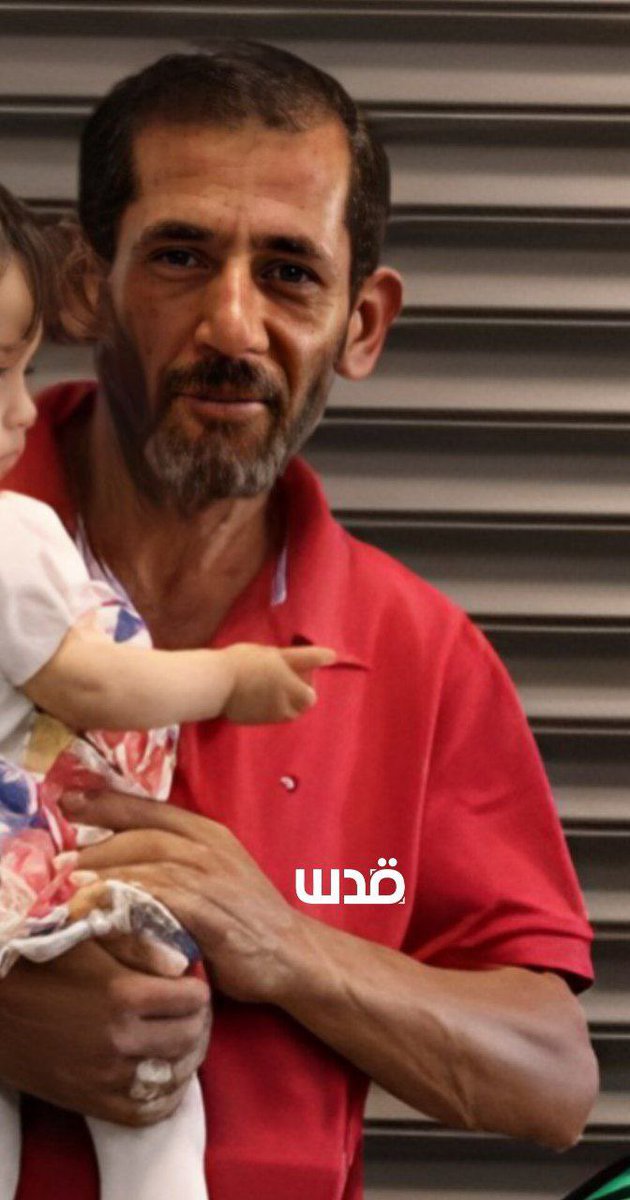
On June 19, in the village of Surif, near Hebron, Israeli settlers under the protection of soldiers carried out a pogrom, setting fire to crops and properties.
They shooting at homes, setting fields ablaze, and trying to set Palestinian houses on fire to burn families alive inside.
They fired live bullets at citizens in the Al-Qurainat area while they were trying to extinguish a fire started by the settlers on the land there. A Palestinian citizen was killed and eight others were injured, including one seriously, his brother Ali, by settlers’ gunfire in Surif, Hebron.
Name of the martyr :
- Muhammad Ahmad Mahmoud Al-Hour (48 years old)
Some of the injured were transferred to nearby hospitals, while others are still receiving treatment at a medical center in the town
.jpg)
Expansion of Operation Iron Wall in Balata al-Balad (Nablus)
West Bank, Nablus, Balata al-Balad
18 June, 2025
Operation Expands in Northern west Bank:
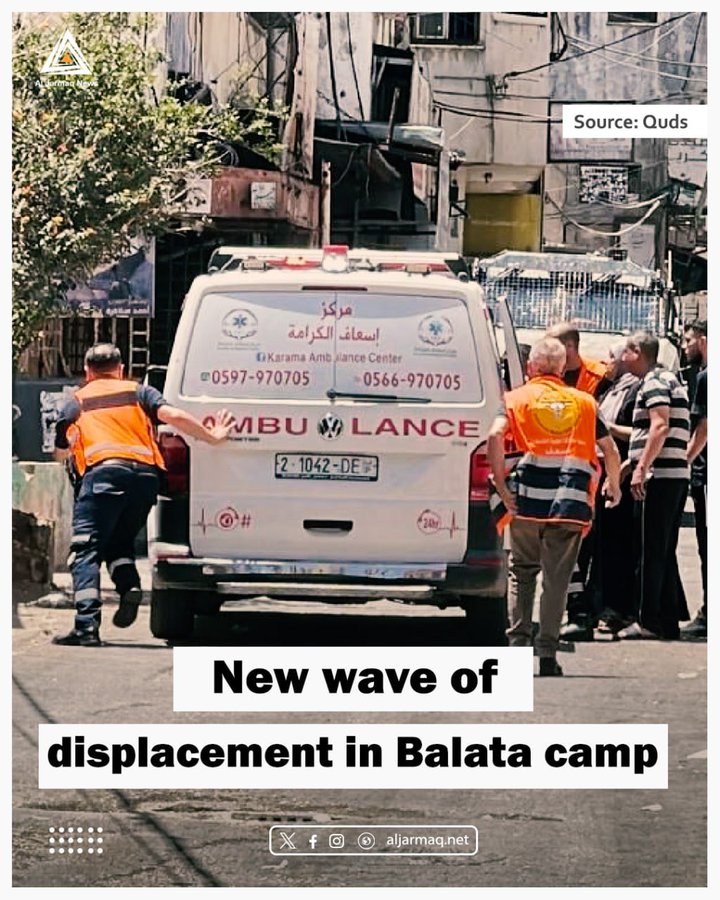
On June 18, during the night, five battalions from the Samaria Brigade entered the Balata refugee camp in Nablus as part of the expanded operations in northern West Bank and as part of Operation 'Iron Wall,' alongside police forces and Shin Bet according to the IDF spokesperson. (Other units operate simultaneously in Meithalun, Jenin in Qalqilya, Salfit and in Jayyous).
Several Israeli military vehicles stormed the camp, surrounded its entrances, and prevented entry and exit.
Snipers were positioned on the rooftops of some homes.
Israeli soldiers raided several homes, ransacked their contents, and forced some families to evacuate their homes, turning them into military barracks and detention and field investigation centers.
The forces searched of homes, arrested wanted individuals and confiscated weapons, combat equipment and military gear.
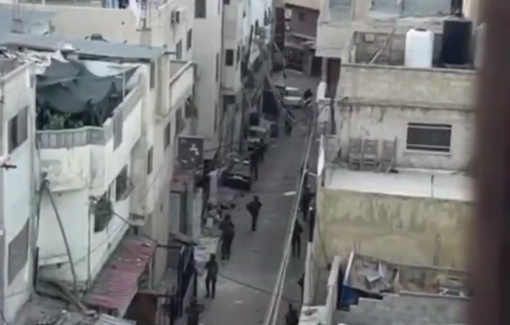
3 days raid in Askar al-Jadeed
West Bank, New Askar Camp, Nablus
16 Jun, 2025 - 18 Jun, 2025
**On June 16, 2025**, sraeli forces raid ‘Askar refugee camp, turning homes into military outposts.
**On June 17, 2025**, Israeli forces continued the assault against the Askar al-Jadid refugee camp to the east. They stormed several neighborhoods in the city, raided a house in the Nablus al-Jadidah neighborhood, and detained a citizen whose identity has not yet been revealed.They raided dozens of homes in the camp and assaulted residents, with several of them subsequently transferred to the hospital.
They also turned a number of houses into military barracks, detained dozens of citizens inside them, and conducted field investigations with them.
They imposed a curfew inside the camp, surrounded all its entrances, and prevented citizens from entering or leaving it.
The details for each video come from social media. None of it has been verified.